
What do I do about Summer Pests?
The three most common lawn destroyers are chinch bugs, fire ants, and grub worms. These pests make their way to your lawn and then they create havoc with their presence.
Chinch Bugs
Chinch bugs suck the moisture from your grass and leave you with dead, brown spots. You cannot entirely stop chinch bugs from infiltrating your property, but you can take some measures to make your lawn less desirable to these moisture thieves.
Keep the lawn thatch on your grass raked up and removed. The thatch is the loose matter that builds up on top of the soil. Rake it up and haul it away.
You can prevent a chinch bug invasion with some specially created insecticides. These insecticides need to be applied early in the spring before the infant chinch bugs emerge from the eggs.
Fire Ants
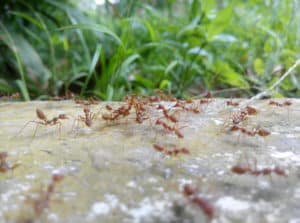
Fire ants are stinging ants that have painful bites. A large number of fire ant bites at one time can make a person very sick. There is really not a way for you to prevent fire ants from invading the serenity of your yard.
To get rid of these creepy crawlers you need to attack their mound in a way that will kill the queen. This takes chemical components that the worker ants can pick up and take to the queen for her dining pleasure. You need to stay alert and attack fire ant mounds while they are small.
Grubs
Grubs can turn your beautiful lawn into an ugly mess. Grubs dwell beneath the soil so you generally are unaware of their presence until the damages they are doing start to be seen.
Once you see the pests you have to take measures to make them leave. If you have had problems with grubs in the past then you can take preventive measures to keep them away.
Chemical treatments are commonly used to cure your grub situation. Some people try letting their lawn dry totally so they can starve the larvae of the moisture they need, but in the end chemical components that you apply in the late summer are effective at eliminating these pests.
The most effective preventive components contain imidacloprid or halofenozide as active ingredients.
Keeping Your Lawn Healthy
One deterrent that helps with almost every type of pest is for you to keep your lawn in good health. You want to feed your lawn with fertilizer so the Ph. balance is properly maintained. Mow your grass and keep it at a height of 3.5 to 4 inches. Provide water during times when nature is not providing enough, but resist over-watering because over-watering is an invitation to many pests.
Final Thoughts
If you want a solution for fire ants Contact Us at Estate Landscaping and learn more about their 1 year ant free yard offer. Let them take care of the pests and you take care of enjoying your lawn again.
Receive a Free Consultation!
Related Posts

The Power of Mulch: Boosting Soil Health and Reducing Weeds
Mulch is one of the simplest yet most effective tools for maintaining a healthy and thriving landscape. Whether used in residential communities, HOAs, or commercial properties, mulch provides numerous benefits, from improving soil health to suppressing weeds and conserving moisture. In Florida’s warm climate, where landscapes endure high temperatures and seasonal rainfall, proper mulching can […]

Benefits of Hiring a Professional Irrigation Company
It is hard to overstate the importance of your lawn, no matter the property type. The health of your turf is the first impression gathered by anyone who views your landscape. For commercial properties hoping to attract new Florida tenants, or resorts looking for tourists, a lush lawn is not only a commodity but a […]
Stormwater-Smart Landscaping: Meeting Florida’s New Drainage and Water Quality Standards
Stormwater management has become a top priority for Florida communities. With updated regulations, increased development, and greater attention on environmental impact, HOAs are under more pressure than ever to manage runoff responsibly—without compromising landscape appearance or functionality. At Estate Landscaping, we help HOA-driven communities adapt to evolving requirements through stormwater-smart landscaping. The goal is simple: […]
