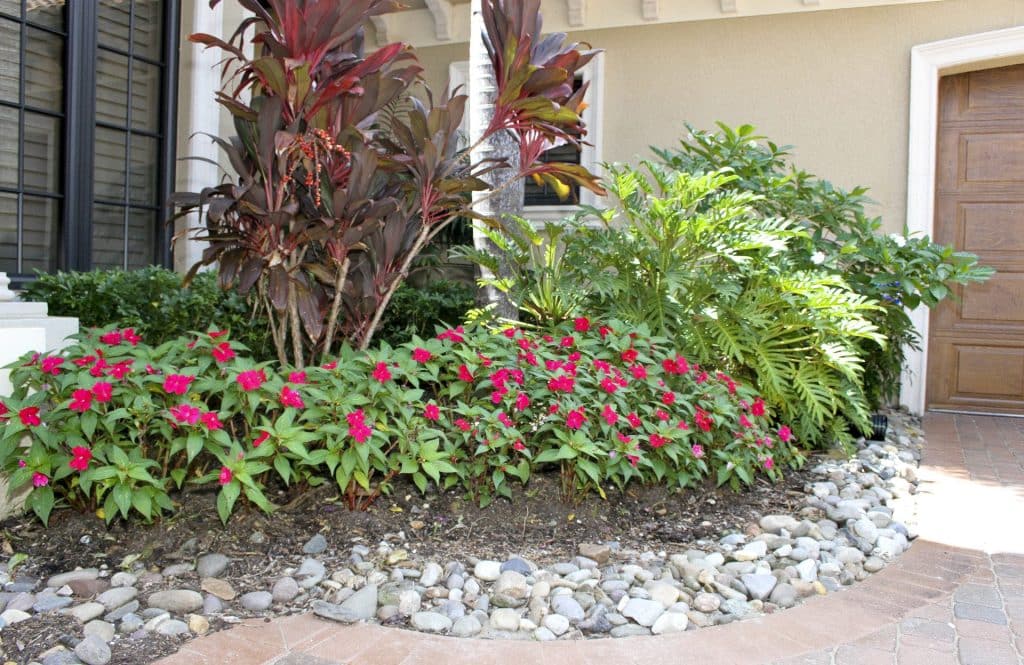
Whether it be for our commercial clients on their expansive properties or our residential clients where space must be maximized, we want to create beauty. For commercial property owners, this is to attract new business and wow current tenants, while homeowners want to improve their curb appeal. Both goals require a healthy landscape, which leads to better-looking plant material. One material that we use to keep plant installations healthy is mulch. The most common landscaping material, mulch provides a bunch of benefits to any plant bed, protecting soil and roots. It insulates them from both cold and heat and acts as a barrier to disease and weeds. Mulch is typically separated into organic and inorganic varieties, with different types falling into each category. We are going to go over five of those mulch types today, noting the advantages and disadvantages of each.
Bark Mulch
Likely the most common type of organic mulch, the bark is very aesthetically pleasing, and a staple of the American landscape. It will naturally add nutrients to the soil over time as it decomposes, and it can be found in a wide range of colors. It is pretty hardy overall and does not need to be replaced as often as other organic types. However, it can eat up some nitrogen if allowed to sit deeper in the soil.
Straw Mulch
Another organic type, the major downside is that straw will not do much in the name of keeping weeds out of your plant bed. It is also flimsy and easily displaced, which can lead to a need for a replacement sooner than expected. It adds nutrients to your soil like an organic option should, and is a good choice for use with edible plantings. The straw will also help your soil retain moisture.
Rock Mulch
The first inorganic type we will be discussing, rock mulch is one of the most beautiful mulch choices. It will maximize the aesthetic benefits, as well as the insulation of soil, prevention of soil erosion, and spread of weeds. Rock mulch is also extremely sustainable, and low maintenance. It would not need to be replaced for many years and requires little work to clean. The disadvantages are that the mulch will not add any nutrients to the soil.
Grass Clippings Mulch
For a very rudimentary mulch option, you can actually use grass clippings. This is because your grass clippings are organic material, full of microorganisms that can actually feed your soil. They are inexpensive, but you also run the risk of adding weed seeds to your soil, which is why we do not recommend this option. As you can guess, it would not be the most aesthetically pleasing option, definitely outdone by the likes of bark and rock.
Wood Chip Mulch
Back to the common organic mulch types option, wood chips are used in a similar fashion to bark. Often found in playgrounds to soften the falls of children, they look very good in any landscape. However, they are not so great for plant beds as they will take from existing nutrients without providing any. They are much better used underneath trees or shrubs as an aesthetic option, or under your child’s jungle gym.
For more information on how Estate Landscaping can take care of your landscaping needs visit our website, give us a call at (239) 498-1187, or send us an email at info@estatelandscaping.com.
At Estate Landscaping & Lawn Management, we’ve always strived to set the bar high when creating and maintaining beautiful, healthy landscapes across Southwest Florida. Today, we’re incredibly proud to announce that the National Association of Landscape Professionals (NALP) has recognized our commitment to excellence with not one but two major awards: the Silver Award of […]
For many Florida HOA communities, turf dominates the landscape—and the maintenance budget. While healthy turf is still an important part of a polished community appearance, not every area benefits from being mowed, edged, and irrigated week after week. In fact, some turf areas quietly create higher costs, ongoing stress, and inconsistent results. At Estate Landscaping, […]
As we welcome April, we would like to take a moment to highlight the importance of National Lawn Care Month and the crucial role that proper lawn care plays in our environment. First and foremost, maintaining a healthy lawn has significant environmental benefits. A well-maintained lawn can help reduce air pollution by absorbing carbon dioxide […]